Can You File a Claim for Pothole or Road Hazard Accidents
How to Recover Compensation from Insurance or the City
After striking a deep pothole at highway speed, many drivers are left dealing with expensive repairs and urgent questions.
- My car was damaged by a pothole — what are my options?
- The road hazard caused serious suspension damage.
- I hit an unmarked pothole and blew a tire.
- The insurance company is blaming road conditions.
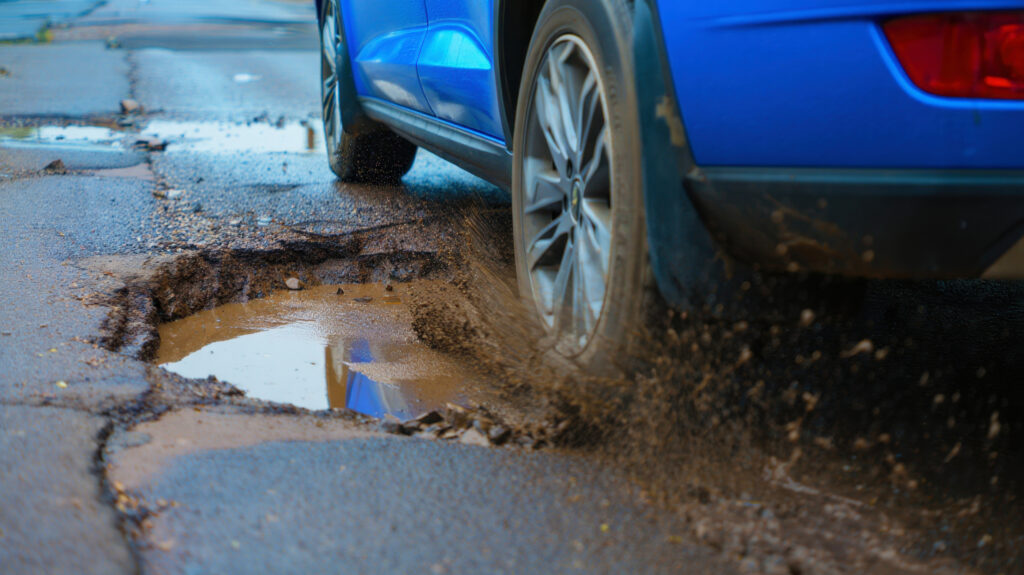
These situations are frustrating, but they are also legally actionable in many cases. Whether you pursue a pothole damage insurance claim or a government claim for roadway negligence depends on who maintained the road, what coverage you carry, and how quickly you act.
This guide breaks the process down step by step.
Determining Who Is Responsible
Identify the Road Owner
The first question is not who caused the damage — it is who maintains the road.
Road maintenance authority may belong to:
- City Municipality: Local streets are typically maintained by a city government through its public works department.
- County Government: In some regions, counties manage certain roadways.
- State Transportation Authority: State highways and numbered routes often fall under state control.
- Federal Oversight: Major interstate systems may involve federal funding and oversight.
Responsibility depends on maintenance authority, not simply where the road is located.
Distinguish Maintenance from Liability
Even if a city maintains the road, that does not automatically make it liable.
To prove municipal liability for road defects, you generally must show:
- Prior Notice: The government knew about the pothole before your incident.
- Constructive Notice: The pothole existed long enough that the government should have discovered it through reasonable inspections.
- Failure to Repair: The agency failed to fix the defect within a reasonable period.
Without evidence of notice, many municipal claims fail.
Filing a Pothole Damage Insurance Claim
Understanding Collision Coverage
In most cases, striking a pothole qualifies as a collision event under your auto policy.
Collision coverage typically pays for:
- Tire damage
- Bent rims
- Suspension damage
- Undercarriage impact damage
You are responsible for your deductible, and the insurer covers the remainder up to policy limits.
Immediate Steps After the Incident
1. Document the Scene
If safe, take photographs of:
- The pothole
- Surrounding roadway
- Nearby signs and landmarks
- Absence of warning signs
2. Document the Damage
Photograph:
- Blown tires
- Cracked rims
- Suspension components
- Leaking fluids
3. Obtain Repair Estimates
Get written estimates from reputable repair shops.
Opening the Insurance Claim
Once documentation is complete:
- Contact your insurer.
- Provide photos and location details.
- Cooperate with the claims adjuster.
- Schedule vehicle inspection if required.
The adjuster will determine whether coverage applies and calculate repair costs.
Deductibles and Premium Considerations
Deductible Impact
You must pay your deductible before coverage applies.
Premium Risk
While a single collision claim may not significantly increase premiums, multiple claims could.
Subrogation Explained
If your insurer pays for repairs, it may pursue reimbursement from the responsible municipality. This process is called subrogation. If the insurer successfully recovers funds, your deductible may be returned.
Filing a Notice of Claim Against the City
What Is a Notice of Claim?
A Notice of Claim is a formal written statement notifying the municipality of your intent to seek compensation.
It is typically reviewed by the city’s risk management department.
Why Filing Is Mandatory
In many jurisdictions, you cannot sue a municipality unless you first file a Notice of Claim.
Failure to file can permanently block your case.
Strict Notice Deadlines
Common Timeframes
Many states require filing within:
- 30 days
- 60 days
- 90 days
Deadlines vary by jurisdiction.
Separate from the Statute of Limitations
The notice deadline comes before the lawsuit deadline.
Missing the notice deadline can end your claim before it begins.
Information Required in the Notice
A proper Notice of Claim should include:
- Incident Details: Date, time, and exact location.
- Description of the Hazard: Size and condition of the pothole.
- Description of Damage: Detailed explanation of vehicle damage.
- Supporting Documentation: Photos, repair estimates, receipts.
Accuracy and precision are critical.
Sovereign Immunity and Legal Exceptions
What Is Sovereign Immunity?
Sovereign immunity protects government entities from many lawsuits. However, most states allow limited exceptions for dangerous roadway conditions.
Roadway Negligence Exceptions
To succeed under an exception, you generally must prove:
- The Defect Was Dangerous: The pothole created an unsafe roadway condition.
- The Government Had Notice: There were prior complaints or sufficient time for discovery.
- The Agency Failed to Act: The municipality did not repair the defect within a reasonable period.
Constructive Notice Explained
Constructive notice means the pothole existed long enough that routine inspections should have revealed it.
Evidence may include:
- Weather patterns
- Visible wear
- Long-standing community complaints
Comparative Negligence Issues
Municipalities often argue the driver shares fault.
They may claim:
- You were speeding.
- You failed to avoid the pothole.
- You were distracted.
If comparative negligence applies, compensation may be reduced.
Building a Strong Evidence File
Scene Evidence
Photographs should show:
- Depth and width of pothole
- Surrounding road conditions
- Traffic patterns
Including a ruler or object for scale strengthens your case.
Vehicle Damage Evidence
Photograph:
- Control arms
- Shock absorbers
- Struts
- Bent wheels
Clear repair invoices linking damage to impact are essential.
Maintenance and Complaint Records
Public records requests may reveal:
- Prior complaints
- Repair logs
- Inspection schedules
Proof of prior notice significantly strengthens municipal claims.
Insurance Claim vs Government Claim Strategy
When Insurance May Be the Better Option
Insurance may be preferable if:
- Repairs are urgent.
- You carry collision coverage.
- The deductible is manageable.
Insurance claims typically resolve faster.
When Filing Against the City May Be Preferable
You may prioritize a municipal claim if:
- Damage is extensive.
- The deductible is high.
- There is clear evidence of prior notice.
Municipal claims may allow full recovery without deductible loss.
Dual Filing Strategy
In some cases, drivers file both:
- Insurance claim for immediate repairs.
- Notice of claim to preserve rights against the city.
This approach requires careful coordination.
What If Your Claim Is Denied?
Common Reasons for Denial
Claims may be denied due to:
- Lack of prior notice
- Missed deadlines
- Insufficient evidence
- Comparative negligence
- Policy exclusions
Responding to a Denial
- Request Written Explanation: Always obtain the official reason.
- Review Evidence: Determine whether documentation gaps can be corrected.
- Consider Appeal: Some jurisdictions allow administrative appeals.
- Evaluate Litigation: In significant damage cases, litigation may be appropriate.
When to Contact a Lawyer
Situations Requiring Legal Guidance
You should consult an attorney if:
- Your damages exceed several thousand dollars.
- The municipality denies responsibility.
- You missed a notice deadline.
- The insurer denies coverage.
- You suffered injuries in addition to property damage.
Why Legal Representation Matters
Municipal liability cases involve:
- Sovereign immunity doctrines
- Strict procedural compliance
- Government tort statutes
- Comparative negligence defenses
An experienced attorney can:
- Investigate maintenance records
- Analyze notice requirements
- Preserve filing deadlines
- Negotiate with insurers
- File suit if necessary
Frequently Asked Questions (FAQ)
Can insurance deny a pothole damage claim?
Yes. Insurance companies may deny claims if coverage does not apply, if documentation is insufficient, or if they believe the damage predated the incident. Reviewing your policy language and providing clear evidence increases the likelihood of approval. If your claim is denied, you can request a written explanation and explore appeal options.
What is sovereign immunity, and how does it affect my claim?
Sovereign immunity is a legal doctrine that protects government entities from many lawsuits. However, most states have enacted laws that create exceptions for dangerous roadway conditions. These exceptions often require proof of prior notice and compliance with strict filing deadlines. Sovereign immunity makes municipal claims more complex than standard insurance claims.
What is a Notice of Claim?
A Notice of Claim is a formal written document informing a government entity that you intend to seek compensation for damages. It typically must include details about the incident, the location of the pothole, the damages sustained, and supporting documentation. Filing this notice within the required timeframe is often mandatory before filing a lawsuit.
What happens if my pothole claim is rejected?
If your claim is denied, request a written explanation. Some denials are based on procedural issues that may be correctable. In other cases, you may have the option to file an administrative appeal or pursue litigation. Consulting an attorney can help you evaluate whether further action is worthwhile.
Can I sue the city for a tire blowout caused by a pothole?
In many jurisdictions, yes — but only after complying with Notice of Claim requirements and meeting the legal standards for municipal liability. You must demonstrate that the pothole created a dangerous condition, that the city had notice of it, and that the failure to repair it caused your damages.
Contact Purchase, George & Murphey, P.C. Today
Pothole damage claims are more complex than they appear. They involve insurance policy analysis, government immunity doctrines, strict notice deadlines, and detailed evidentiary standards.
If your car was damaged by a pothole, you may have the right to recover compensation — but success depends on acting quickly and building a strong case.
Deadlines are short. Documentation is critical. Government defenses are technical.
If you are facing tire damage, suspension damage, or other losses caused by unsafe roadway conditions, do not delay.
Contact Purchase, George & Murphey, P.C. today to evaluate your case, protect your rights, and determine whether the city or your insurance provider should be held accountable.
Notable Results
Purchase, George & Murphey, P.C. publishes the following results.
$1.25 Million verdict · $700,000 settlement
Read more about these results
- $1.25 million verdict: McKean County car accident. Read the source account.
- $700,000 settlement: Motorcycle fatality; the underinsured motorist carrier paid the policy limits. Read the source account.
- $325,000 settlement: Truck driver’s injury claim grown from an initial offer of zero in six months. Read the source account.
- $260,000 evaluation: Rear-end accident underinsured motorist claim. Read the source account.
- $200,000 settlement: Pennsylvania premises liability case. Read the source account.
- $185,000 settlement: Accident settlement for a C5-C6 herniation requiring vertebral fusion. Read the source account.
Read the firm’s published results
Prior results do not guarantee a similar outcome. Each case is different and must be evaluated on its own facts.
What Our Clients Say
These excerpts describe experiences with the firm. They are not identified as cases in this practice area and do not predict another outcome.
“Great firm to work with the legal teams are caring, considerate, and are always there for you when you have a question. I wouldn’t use anyone else.”
— Stephen · Read the full Google review
“From the moment I contacted Attorney Tim George, he acted quickly and followed up with me after hours. He always kept me informed. Tim George is incredibly compassionate and empathetic. Tim is a strong negotiator and stands strong for his clients facing serious criminal charges.”
— Tracy · Read the full Google review
Awards & Recognition
- AV Preeminent® — Martindale-Hubbell’s highest peer review rating for ethics and legal ability.
- Pennsylvania Super Lawyers — all three firm principals named to the list; Craig Murphey has been selected every year since 2011 and Eric Purchase every year since 2013.
- The Best Lawyers in America® — Craig Murphey listed since 2012 and named “Lawyer of the Year” for the Pittsburgh region in Personal Injury–Defense (2017) and Insurance Law (2019 and 2023); Tim Riley listed since 2008.
- Avvo — 10.0 “Superb” rating and Client’s Choice Awards for criminal defense and DUI defense.
- The National Trial Lawyers — Top 100 Trial Lawyers.