Your Motorcycle Insurance Does Not Work Like Your Car Insurance
Purchase, George & Murphey, P.C.
The document that decides what a motorcycle crash costs you is about a page long. It is the declarations page of your policy, it came in an envelope you probably recycled, and there are two lines on it that will matter more than anything you do on the bike.
Most riders find that out in the wrong order.
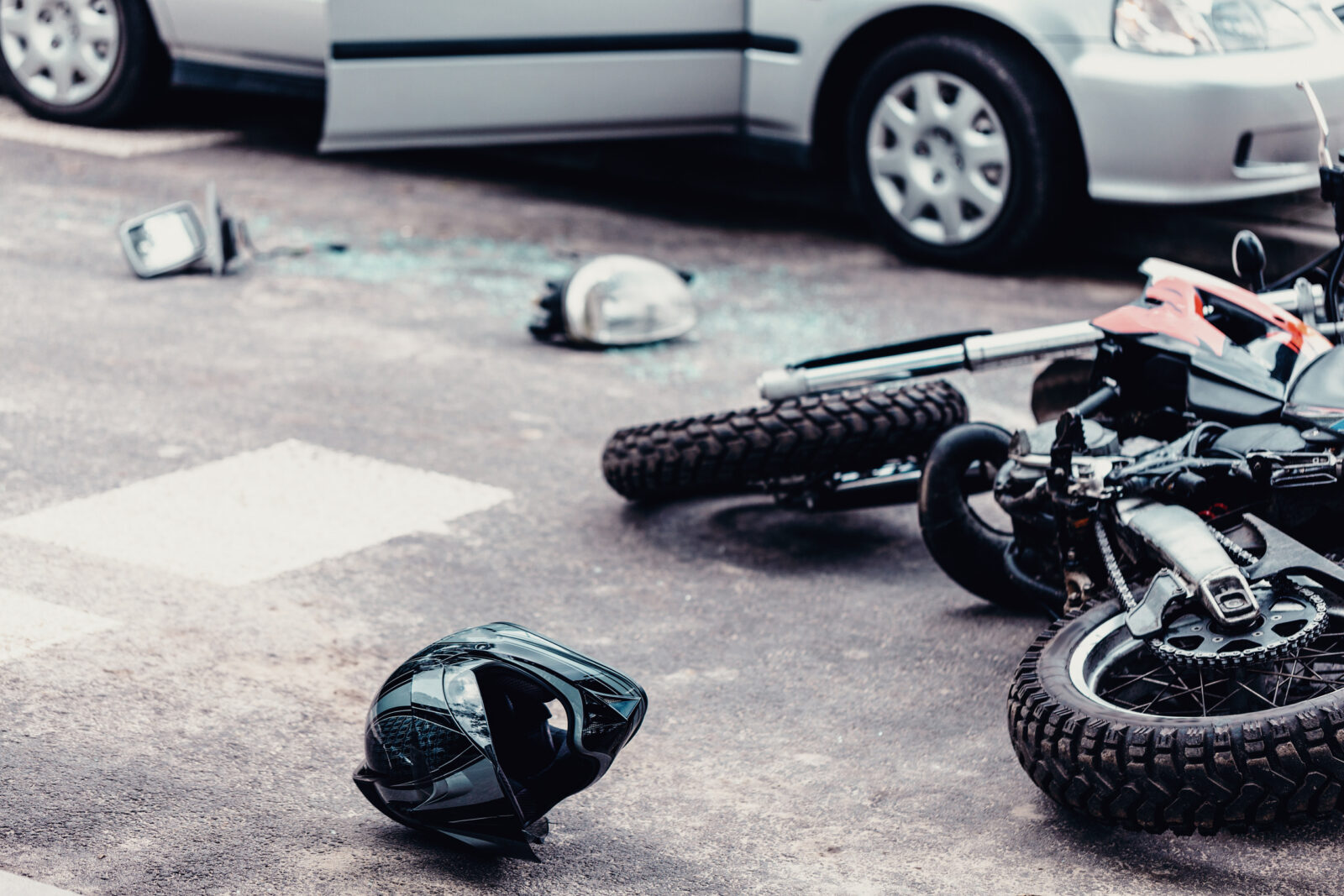
The call comes a week or so after the crash, not the day of. The day of, people are dealing with the orthopedist. It comes when the first bill arrives and the rider learns that the medical coverage on his auto policy, the coverage he has paid into for fifteen years without reading it, does not reach him on the bike.
That is not an insurer being difficult. It is Pennsylvania law working precisely as written. And on two of the questions that decide these cases, Pennsylvania has not finished answering yet.
The $5,000 That is Not There
Every private passenger auto policy issued in Pennsylvania has to carry at least $5,000 in medical benefits. The insurer has no choice about including it.
Read the statute closely and you find the carve-out. Under 75 Pa.C.S. § 1711(a), that requirement covers policies on any motor vehicle required to be registered, “except recreational vehicles not intended for highway use, motorcycles, motor-driven cycles or motorized pedalcycles or like type vehicles.”
Motorcycles are named. They sit outside the mandate.
A second provision closes the door from the other direction. Section 1714 provides that an “operator or occupant of a recreational vehicle not intended for highway use, motorcycle, motor-driven cycle, motorized pedalcycle or like type vehicle” required to be registered “cannot recover first party benefits.”
Together those two sections put a Pennsylvania rider in an unusual spot. The $5,000 medical benefit is not required on a motorcycle policy, and § 1714 separately provides that a motorcycle operator or occupant “cannot recover first party benefits.” The coverage sitting in your driveway does not follow you onto the bike.
Medical benefits can still be purchased; § 1712 makes them available. How coverage a rider buys voluntarily interacts with § 1714’s bar is not something the statutes settle between themselves, and there is no tidy answer to offer. The practical point is narrower and holds either way: the protection that is automatic in the car is not automatic on the bike, and a great many riders have never been told to ask what is actually on the motorcycle policy.
What Pennsylvania Does Require
Liability coverage. Section 1786 obligates an owner to maintain financial responsibility, and § 1702 defines what that means: $15,000 for bodily injury to one person, $30,000 for injury to two or more people in one accident, $5,000 for damage to the property of others.
Those figures went into the statute in the 1980s and have not moved since. Fifteen thousand dollars is a helicopter ride and part of an emergency department bill. If the driver who turns left across your lane carries the state minimum and you have an open tibia fracture, the arithmetic is finished before the claim starts.
Which is why the coverage that actually protects a rider here is the coverage nobody makes you buy: underinsured and uninsured motorist limits, and medical benefits elected onto the motorcycle policy itself.
What We Read First on a Policy, and Why
When a rider brings us a new file, the declarations page comes before the police report. Two lines on it decide the ceiling of the case.
The first is the underinsured motorist limit, because in a serious motorcycle case the at-fault driver’s liability limit is usually the smaller number, and UIM is what stands between the rider and the gap.
The second is the tort election, and this is the line worth understanding, because of how the statute treats a form nobody signed. Section 1705(a)(3) provides that a named insured who does not respond to either of the two required notices “ten days prior to the renewal date” is “conclusively presumed to have chosen the full tort alternative.” Limited tort is opt-in. It takes a signature. Full tort is the default that arrives through inaction.
So when a carrier’s letter asserts a rider is limited tort, the first question is not whether that is a fair reading of the policy. It is whether the insurer can produce a signed election. Sometimes it cannot. Section 1705(a)(5) runs the other way and deems an owner of a registered private passenger vehicle who carries no financial responsibility to have chosen limited tort, so the presumption is not a one-way street. But the document either exists or it does not, and that is a question with an answer, which is more than can be said for most of what gets argued in the first month of a claim.
Helmets: The Statute, and the Subsection People Skip
Section 3525(a) requires protective headgear on a motorcycle. Subsection (d) then exempts four categories:
- the operator or any occupant of a three-wheeled motorcycle with an enclosed cab;
- a person 21 or older licensed to operate a motorcycle for not less than two full calendar years;
- a person 21 or older who has completed a rider safety course approved by PennDOT or the Motorcycle Safety Foundation;
- the passenger, 21 or older, of an exempt operator.
Unchanged since the July 2003 amendment. Over 21 with two years of licensure, you are riding legally without a helmet in Pennsylvania.
One category the statute does not spell out but PennDOT does: a learner’s permit holder wears a helmet regardless of age. The two-year clock in subsection (d)(2) runs on being licensed, not on riding, so a permit does not start it.
Now look at what subsection (d) exempts you from. Its opening words are that “the provisions of subsection (a) shall not apply.” Subsection (a) is the helmet. Eye protection sits in its own subsection, and (d) never reaches it.
Section 3525(b): “No person shall operate or ride upon a motorcycle (other than a motorized pedalcycle or a three-wheeled motorcycle equipped with an enclosed cab) unless he is wearing an eye-protective device of a type approved by the department.”
The only carve-outs written into (b) are motorized pedalcycles and enclosed-cab three-wheelers. Age is absent. Years of licensure, absent. Course completion, absent.
Which means a 45-year-old rider with twenty years of licensure is exempt from the helmet requirement and still owes approved eye protection. Two subsections doing two separate jobs, and the exemption only reaches one of them. It gets stated wrong more often than right, including on law firm websites.
The Helmet Question Pennsylvania Has Not Answered
The question riders actually ask is a different one: if I was not wearing a helmet and a driver caused the crash, can they use that against me?
The real answer serves a rider better than a confident one.
What is verifiable is that § 3525 says nothing about civil cases. No admissibility rule, no contributory negligence provision, no jury instruction. It regulates equipment and stops there.
What makes that silence worth noticing is that the General Assembly has written exactly that kind of provision twice, in nearly the same words, for other equipment.
Bicycle helmets, § 3510(c): “In no event shall a violation or alleged violation of subsection (a) be used as evidence in a trial of any civil action; nor shall any jury in a civil action be instructed that any conduct did constitute or could be interpreted by them to constitute a violation of subsection (a); nor shall failure to use a pedalcycle helmet be considered as contributory negligence.”
Seat belts, § 4581(e): “In no event shall a violation or alleged violation of this subchapter be used as evidence in a trial of any civil action.”
Bicycle helmets, shielded. Seat belts, shielded. Motorcycle helmets, silence.
That silence proves less than it might seem. It is an argument, not a holding. We have not found a published Pennsylvania appellate decision resolving whether helmet non-use is admissible in a civil damages case, in either direction, and a lawyer who tells you flatly that it can or cannot be used is describing something firmer than the case law supports. A defense lawyer will say the legislature’s silence leaves the door standing open. The counter is that the legislature knew precisely how to close that door, did it twice, and declined to here. Neither side can hand you a decision.
The practical shape is more reassuring than the uncertainty sounds. For most adult riders in Pennsylvania there is no violation to argue about at all, because subsection (d) makes the choice lawful. And a defendant who wants to cut damages this way cannot simply note a bare head. He has to tie the missing helmet to the specific injuries claimed, with medical proof. That is a causation fight, and causation fights are winnable.
Limited Tort, and Whether It Reaches Two Wheels
Limited tort on your car surrenders the right to recover for pain and suffering unless the injury is serious or an exception applies. It saves a modest amount each year and is the most expensive decision most Pennsylvania drivers make without noticing they made it.
One provision of the tort election statute matters a great deal here. Section 1705(d)(3):
“An individual otherwise bound by the limited tort election shall retain full tort rights if injured while an occupant of a motor vehicle other than a private passenger motor vehicle.”
Section 1702 then defines “private passenger motor vehicle.” The full definition has several parts, and they matter: “a four-wheel motor vehicle,” excluding recreational vehicles not intended for highway use, “which is insured by a natural person,” and which is either a passenger car not used as a public or livery conveyance and not rented to others, or has a gross weight under 9,000 pounds and is not principally used commercially.
A motorcycle fails at the first clause. On the face of those provisions, a rider bound by limited tort through a car policy is hurt as the occupant of something that is not a private passenger motor vehicle, and § 1705(d)(3) gives the full tort rights back.
That reading comes straight off the text, and on a motorcycle it is about as clean as this argument gets, because the disqualifying feature is a wheel count rather than a judgment call about how a vehicle was being used. We made a version of the same argument in a piece on rideshare crashes, where it is real but harder, since a logged-in Uber is a four-wheel car and the argument has to run through how the vehicle was being used instead. Two wheels is simpler.
Precision matters more than enthusiasm here, so: this is a text-based argument, not a settled appellate holding. The published Pennsylvania appellate decisions construing § 1705(d)(3) that we have found involve a work van and a pedestrian struck near a school bus. None involves a motorcycle.
There is also a trap, which is why no rider should read the paragraph above and stop worrying. In Bennett v. Mucci, 901 A.2d 1038 (Pa. Super. 2006), the Superior Court held that someone who “elects limited tort coverage for a vehicle under a private passenger motor vehicle liability insurance policy can not later claim that the same vehicle is not a private passenger motor vehicle for purposes of § 1705.” That plaintiff had insured a work van as a private passenger vehicle, accepted the cheaper limited tort premium, then argued the van fell outside the definition. The court held him to his election. Notice what that means: on a literal reading of § 1702, a van used only for a flooring business arguably was not a private passenger motor vehicle. The court treated it as one anyway, because he had bought the policy that said it was.
Now apply that to a rider who checked limited tort on the motorcycle’s own policy. It is the argument the defense will bring, and Bennett is what they will bring it with. Two wheels is a harder fact to argue around than commercial use, and Bennett is intermediate appellate authority that distinguishes rather than overrules the Supreme Court’s reading in L.S. v. Eschbach, which leaned toward full tort. But if you are pulling out your policies this week, the tort election line on the motorcycle policy is the one to find.
The Clocks
Two years to file a personal injury suit, 42 Pa.C.S. § 5524(2).
The one people do not see coming is much shorter, and it is measured in months rather than years. When a government unit may be responsible, and a road-defect or maintenance claim after a motorcycle crash frequently means exactly that, 42 Pa.C.S. § 5522 requires written notice to that government unit long before the two-year suit deadline, with claims against a Commonwealth agency also filed with the Attorney General. That window can close while you are still in a walking boot, which is why a crash involving a pothole, a work zone, a guide rail or a municipal road is a call to make early rather than eventually.
It is not quite the guillotine it looks like either, and a rider who thinks he is already past it should not assume the case is gone. The same section directs that a court “shall excuse failure to comply with this requirement upon a showing of reasonable excuse,” and against a local government unit rather than the Commonwealth, missing the notice “shall not be a bar if the government unit had actual or constructive notice of the incident.” There are tolling provisions for incapacity as well. None of that is a reason to be casual about the deadline. It is a reason to find out where you stand instead of assuming you are too late.
When They Say It Was Partly Your Fault
They will say it. Plan on it.
Section 7102(a) provides that a plaintiff’s own negligence does not bar recovery “where such negligence was not greater than the causal negligence of the defendant or defendants,” and that damages “shall be diminished in proportion to the amount of negligence attributed to the plaintiff.”
Read that phrasing literally, because the shorthand people repeat gets it backwards. “Not greater than” means a rider found half at fault still recovers, reduced by half. Being found more than half at fault is what ends it.
Why the fight lands harder on two wheels: the assumption arrives before the facts do. Pennsylvania’s own crash statistics give an adjuster something to gesture at, and he will, whether or not it has a thing to do with the rider in front of him. The share of riders that data actually describes is small. The share it gets applied to is all of them. Which is why the early work in these cases is documentary rather than rhetorical: the scene measurements, the sight lines, the other driver’s phone records, the download from the car’s event data recorder if it has one. Not argument. Evidence that was already there.
The Free Course that Also Satisfies the Exemption
The Pennsylvania Motorcycle Safety Program is run by PennDOT through approved third-party providers. PennDOT’s own language: “Classes operating under the PAMSP are free to Pennsylvania class M permit and motorcycle license holders.” Completing a Basic or Intermediate course also waives the PennDOT skills test.
It is also, under § 3525(d)(3), one of the two routes by which a rider 21 or older becomes exempt from the helmet requirement.
Free, licenses you without the skills test, and satisfies the statutory exemption. There is Erie-area training at Harley-Davidson of Erie on West 12th Street through a PennDOT-approved provider; check that provider’s current calendar for dates.
Nobody here is going to tell you what to put on your head. Subsection (d) settled that, and it settled it in your favor. The point is that the course costs nothing and does three things at once.
Before the Next Ride
Find your declarations pages, the car and the bike, and look for three things: whether medical benefits are listed on the motorcycle policy, what the underinsured motorist limit is, and whether either policy shows a limited tort election. Fifteen minutes, and it determines more about the outcome of a bad day than anything else you can control.
If a crash has already happened and you are trying to work out which policy owes you what, that is the conversation to have with a firm that reads insurance policies for a living. Our founding partner spent the first half of his career defending the region’s largest insurance companies before he began representing the people they insure against, which is a useful thing to have on your side of the table when a carrier starts explaining what your policy does not cover. There is no charge to have your policies and your claim looked at.
Purchase, George & Murphey, P.C. represents injured riders across Erie County, Crawford County, and northwestern Pennsylvania, from offices in Erie and Meadville.
Frequently Asked Questions
Does my car insurance cover me on my motorcycle in Pennsylvania?
Not for first-party medical benefits. 75 Pa.C.S. § 1711(a) excludes motorcycles from the mandatory $5,000 medical benefit, and § 1714 provides that a motorcycle operator or occupant “cannot recover first party benefits.” Medical coverage has to be elected on the motorcycle policy itself, which is why the absence of a medical benefits line on a motorcycle declarations page is the first thing worth checking.
What insurance does Pennsylvania require for a motorcycle?
Liability coverage at the financial responsibility limits in § 1702: $15,000 per person, $30,000 per accident, $5,000 property damage. Underinsured and uninsured motorist coverage and medical benefits are available but not mandated, and in a serious crash they are usually the coverage that matters, because the at-fault driver’s limit is often the smaller one.
Do I have to wear a helmet in Pennsylvania?
Not if you are 21 or older and have either held a motorcycle license for at least two full calendar years or completed a PennDOT- or MSF-approved rider safety course (§ 3525(d)). Riders under 21 must wear one, as must a passenger under 21. PennDOT also requires a learner’s permit holder to wear a helmet regardless of age.
If I am exempt from the helmet law, am I also exempt from eye protection?
No, and this is the most common mistake in the area. The § 3525(d) exemptions apply by their terms only to subsection (a), the helmet requirement. Eye protection lives in § 3525(b), whose only exceptions are motorized pedalcycles and enclosed-cab three-wheelers. Neither age nor experience nor a safety course reaches it.
Can the insurance company use the fact that I was not wearing a helmet against me?
We have not found a published Pennsylvania appellate decision deciding it, either way. Section 3525 contains no civil-evidence provision, unlike the bicycle helmet statute (§ 3510(c)) and the seat belt statute (§ 4581(e)), which expressly bar such evidence. Anyone answering with certainty is going past what Pennsylvania law establishes. Practically, most adult riders have committed no violation to argue about, and a defendant would still have to prove the missing helmet caused the particular injuries claimed.
Does limited tort on my car policy limit what I can recover for a motorcycle crash?
Section 1705(d)(3) restores full tort rights to a person injured “while an occupant of a motor vehicle other than a private passenger motor vehicle.” Section 1702 defines that term as a four-wheel motor vehicle insured by a natural person that is either a passenger car not used for hire or under 9,000 pounds and not principally commercial. A motorcycle fails the first condition. The text points one way; we have not found a Pennsylvania appellate decision applying the provision to a motorcycle. A rider who elected limited tort on the motorcycle’s own policy also faces the estoppel argument from Bennett v. Mucci, 901 A.2d 1038 (Pa. Super. 2006). Worth a policy review rather than an assumption in either direction.
What if I never chose full or limited tort?
Then you are very likely full tort. Section 1705(a)(3) provides that an insured who does not respond to the two required notices is “conclusively presumed to have chosen the full tort alternative.” Limited tort requires an affirmative election, so if a carrier claims you are limited tort, ask it to produce the signed form.
How long do I have to file after a Pennsylvania motorcycle crash?
Two years under 42 Pa.C.S. § 5524(2). If a government unit may share responsibility, 42 Pa.C.S. § 5522 imposes a much shorter written-notice requirement, measured in months from the date of injury, with claims against a Commonwealth agency also filed with the Attorney General. That shorter clock is the one that surprises people. It is not absolute. The same section requires a court to excuse non-compliance on a showing of reasonable excuse, and against a local government unit it is not a bar where that unit had actual or constructive notice. A missed deadline is a reason to call rather than a reason to give up.
Can I still recover if the crash was partly my fault?
Yes, unless your share is greater than the defendants’. Section 7102(a) bars recovery only where the plaintiff’s negligence was “greater than” the causal negligence of the defendants against whom recovery is sought, and otherwise reduces damages in proportion. A rider found 50 percent at fault recovers half. One thing to know about the rest of that statute: under § 7102(a.1), a defendant’s liability is generally several rather than joint unless it is held at least 60 percent responsible, which changes what actually gets collected when fault is spread across several parties.
Purchase, George & Murphey, P.C. is a Pennsylvania law firm representing injured people throughout Erie County, Crawford County and northwestern Pennsylvania, with offices in Erie and Meadville.
Notable Results
Purchase, George & Murphey, P.C. publishes the following results.
$1.25 Million verdict · $325,000 settlement
Read more about these results
- $1.25 million verdict: McKean County car accident. Read the source account.
- $325,000 settlement: Injury claim grown from an initial offer of zero in six months. Read the source account.
- $260,000 evaluation: Rear-end accident underinsured motorist claim. Read the source account.
- $200,000 evaluation: Underinsured motorist claim at policy limits after a rear-end collision in Erie. Read the source account.
- $75,000 settlement: Erie car accident; the settlement was driven by the client’s lost wages. Read the source account.
Read the firm’s published results
Prior results do not guarantee a similar outcome. Each case is different and must be evaluated on its own facts.
What Our Clients Say
These excerpts describe experiences with the firm. They are not identified as cases in this practice area and do not predict another outcome.
“Got my case dropped before it even hit the big courts!!! He’s an amazing lawyer and the money is WELL worth the results. Thank you so much again!”
— Morgan · Read the full Google review
“I highly recommend Tim George for any of your legal needs. He is kind, compassionate, detailed and excellent at his job. He meets and communicates with you regularly and gives you all possible outcomes to prepare you ahead of time. He recaps once everything is over and stays in touch.”
— Janice · Read the full Google review
Awards & Recognition
- AV Preeminent® — Martindale-Hubbell’s highest peer review rating for ethics and legal ability.
- Pennsylvania Super Lawyers — all three firm principals named to the list; Craig Murphey has been selected every year since 2011 and Eric Purchase every year since 2013.
- The Best Lawyers in America® — Craig Murphey listed since 2012 and named “Lawyer of the Year” for the Pittsburgh region in Personal Injury–Defense (2017) and Insurance Law (2019 and 2023); Tim Riley listed since 2008.
- Avvo — 10.0 “Superb” rating and Client’s Choice Awards for criminal defense and DUI defense.
- The National Trial Lawyers — Top 100 Trial Lawyers.